What Nobody Tells You About Working with Hand-Dyed Yarn

Hand-dyed yarn is genuinely one of the best things about fiber arts. The depth and movement in a well-dyed skein is something commercial yarn cannot replicate, and working with it comes with its own learning curve. Most of that curve comes down to things nobody puts on the label.
Here is what I wish someone had told me earlier.
Tonals: Alternate Your Skeins

Tonals, sometimes called semi-solids, are yarns dyed in a single color but with enough variation in depth that the skein has life and movement to it. They look fairly uniform in the skein, but in a finished project they often show subtle shifts in shade from one area to the next. That variation is usually the point. It is what gives hand-dyed fabric its character compared to a flat commercial solid.
The main thing to know about tonals is that no two skeins will be exactly the same, even from the same dyer and the same colorway. Dye batches vary. If your project uses more than one skein, alternating them as you go is worth the extra step. The difference between two skeins might not be visible when you hold them side by side, but it can show up as a visible line across your finished fabric if you work one skein all the way through before starting the next. Alternating every few rows or rounds blends the transition so gradually that it becomes invisible in the finished piece.
Variegated: Know What You Are Working With

Variegated yarns, the ones with multiple colors in a single skein, have their own set of considerations, and they mostly come down to what kind of variegated you have.

There are two broad approaches to hand-dyeing variegated yarn. The first is a poured method, where color is applied in distinct sections along the skein. This produces clear color separations and longer runs of each individual color. When you work with this kind of yarn, those color sections have a tendency to stack up as you go, creating areas where the same color keeps appearing in the same spot. That is pooling, and it is more common with poured yarns because the structure of the color repeats is more predictable.

The second approach is a blended method, where the colors are worked into each other more gradually during the dyeing process. Blended yarns have softer transitions and less predictable color runs, which means pooling is less likely. The randomness of the blending works against the repetition that causes it. You may still see some pooling depending on your stitch count and gauge, but it tends to be subtle and less distracting.
The simplest way to manage pooling with any variegated is the same solution as with tonals: alternate skeins. Working from two skeins at once and switching every few rows breaks up the color repeats enough that a pooling pattern cannot establish itself. It takes a little more attention as you work, but it is the most consistent way to keep things looking even.
The Weight on the Label Is Not What You Think
This one surprises a lot of people the first time. You order a 100g skein of hand-dyed yarn and it arrives weighing 106g. Your first thought might be that you got a little extra. You did not.
The weight listed on the label is the approximate weight of the yarn before it was dyed. During the dyeing process, yarn absorbs dye and water, and some of that stays in the fiber. A skein that weighed 100g going into the dye pot might weigh 105 or 108g by the time it reaches you. That extra weight is dye, not yarn.
The yardage on the label is still accurate, or very close to it. When you are planning a project and calculating how much yarn you need, go by yardage, not grams. Buying by weight from a hand-dyer without checking the yardage is where people get into trouble, especially when comparing skeins from different dyers where the base yarn and fiber content differ.
The Same Yarn Can Look Completely Different Depending on How You Work It
Before you commit a hand-dyed skein to a specific project, it is worth knowing that the same yarn can look completely different depending on how it is worked up. Knitting, crochet, and Tunisian crochet each interact with color in their own way, and a skein that photographs beautifully in one construction might read totally differently in another.
In knitting, stitches are small and compact, and color moves across the fabric in a fairly even, horizontal way. In regular crochet, stitches are taller and have more texture, which means the same color can read more broken up or scattered depending on the stitch pattern. In Tunisian crochet, the two-pass structure creates a woven-looking fabric where color shifts gradually rather than jumping, and the vertical columns of the stitches let colors blend into each other in a way that neither knitting nor regular crochet replicates.
Swatching with a new hand-dyed yarn in the actual craft and stitch pattern you plan to use is worth doing, especially if you are buying based on a photo you saw worked up differently. A yarn that looks stunning in a knit stockinette swatch might look completely different in a crochet pattern, and what pools badly in one construction might spread beautifully in another. The yarn is the same. The construction is what changes how it reads.
Tunisian Crochet and Variegated Yarn

If you have been curious about Tunisian crochet and you love hand-dyed variegated yarn, that is a good combination to explore. The two-pass structure interacts with color in a way that regular crochet does not. Color shifts tend to be gradual rather than abrupt, and the fabric has a depth that lets multiple tones sit alongside each other without competing. Variegated yarn often does its best work in Tunisian.

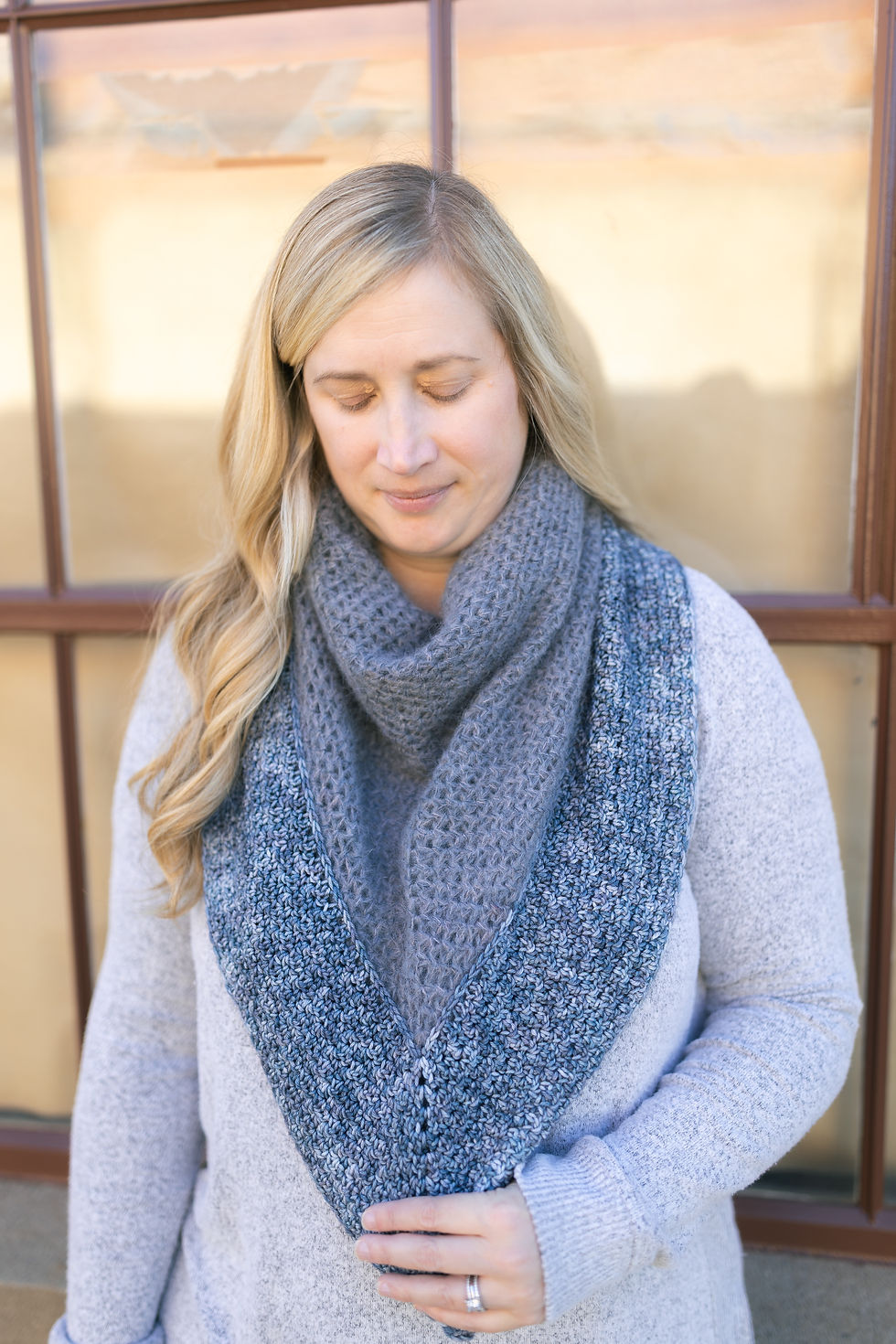
The Tapestry Raglan was designed with this in mind. It started with a specific hand-dyed colorway from Zeezee Textiles, and the construction was built around letting that yarn do what it does. The VL Scarf and VL Hat are other good examples of how Tunisian handles a variegated DK paired with a tonal, showing off the way the two-pass structure blends the color story across the fabric.
Once you work a few rows of Tunisian with a hand-dyed variegated you love, it is hard to go back to saving it for a different project.
Where I Buy Hand-Dyed Yarn
There are a lot of small businesses dyeing yarn right now, and the quality is genuinely good across the board. You can find hand-dyed yarn at most local yarn shops, or you can buy directly from the dyer through their website or shop. How that works varies. Some dyers sell through preorders, meaning there is a set window when you can place an order and then they dye to fill it. Others keep dyed-to-order sweater quantities available, so you can get the yardage you need for a bigger project without having to wait for a specific sale or restock. Here are my favorites that have that: Frosted Stitch, Bad Sheep Yarn (affiliate link, use code VIOLET10 for 10% off), Zeezee Textiles, and Yarn Matter.
Final Thoughts
Hand-dyed yarn rewards a little bit of knowledge going in. Alternate your skeins, know whether your variegated is poured or blended, buy by yardage rather than weight, and if a yarn surprises you in one construction, try it in another before you write it off. Those habits cover most of what trips people up. The rest is just the good part.